Solitaire Card Game
- 4.8
- Rating
- 5.00M
- Installs
- Free
- Price
 Analysis by App-foxy
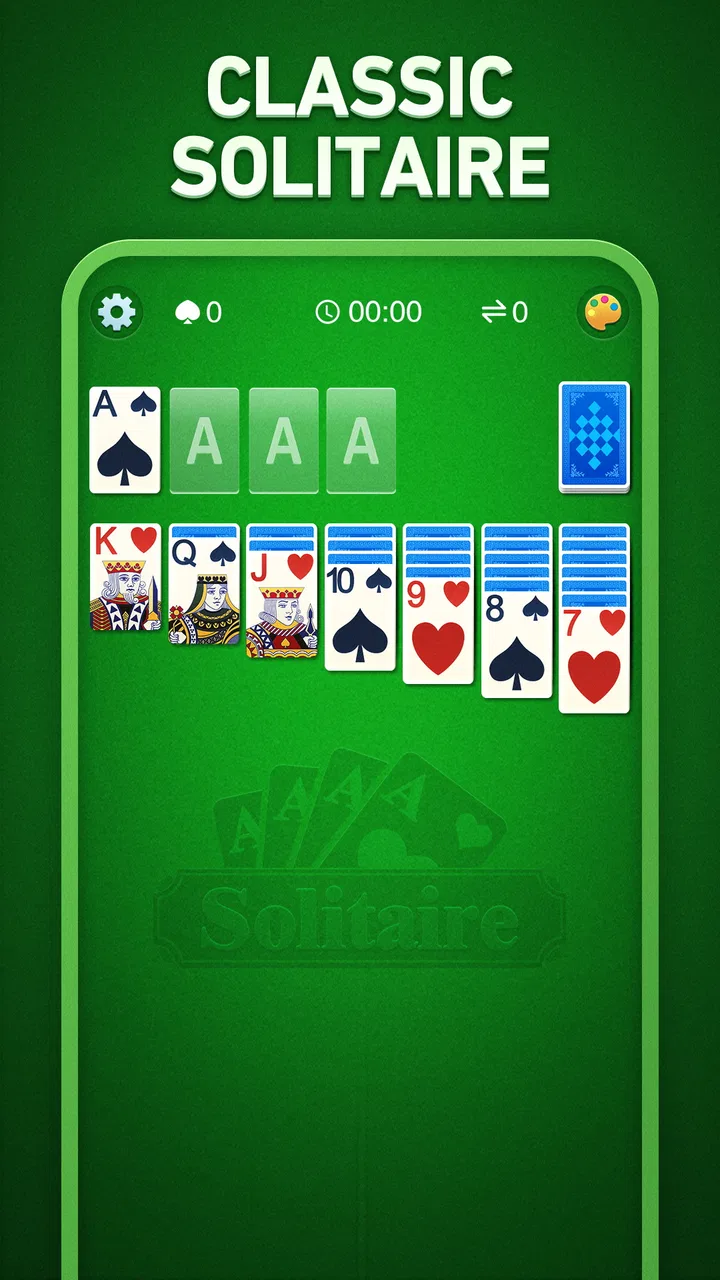
I spent time with Solitaire Card Game as the kind of quiet card game I could open without preparing for a long session. Its main appeal is simple: it keeps the familiar solitaire format easy to reach, including when I am away from a connection. That makes it a comfortable choice for a coffee break, a commute, or a few minutes before bed rather than a game that demands constant attention.
My overall view is positive, but specific. This is best understood as a straightforward, low-pressure solitaire game for people who want a familiar card puzzle and a relaxed pace. It is not the right pick if you are searching for a deep collection of competitive modes, a dramatic presentation, or a constantly changing strategy experience. Within its narrower purpose, though, it does a good job of being approachable.
How the solitaire experience feels in everyday use
The game belongs to the card category and is developed by Degoo ltd. It is free to use and rated for Everyone, which matches the uncomplicated nature of the experience. I found the basic appeal strongest when I wanted something more engaging than scrolling but less demanding than a strategy game. A single deal gives me a small mental task, and I can stop after it without feeling that I have abandoned a larger campaign.
You May Also Like

 Blood Strike: 2.5 Anniversary
Blood Strike’s Loadouts Turn Every Drop Into a Tactical Gamble
A close look at Blood Strike’s custom loadouts: how fast access to signature weapons reshapes its battle royale rhythm, rewards preparation, and narrows the gap between fights.

 Pandora - Music & Podcasts
Pandora’s Music Is Easy to Start, but Harder to Recover
Pandora’s strength is its low-effort path from a seed to a station. Its weak spot is how much confidence it asks you to place in connection, setup, and quiet recovery.

 8 Ball Pool
 Is Built on Rivalries, Rematches, and Routine
A close look at the rivalries, rematches, shared routines, and unanswered safety questions that turn a quick pool match into a persistent mobile community.

 Samsung Music
’s Quiet Strength Is Playing What You Already Own
Its reach comes less from spectacle than from dependable access to a personal library. That simplicity is both the app’s strongest retention engine and its ceiling.

 AccuWeather: Weather Radar
AccuWeather Review: A Quick, Clear Forecast for Everyday Decisions
For everyday plans, the best forecast is the one you can understand quickly. AccuWeather makes rain timing, radar, and local conditions easy to act on, with a few trade-offs.

 Hill Climb Racing
Why Hill Climb Racing Still Turns Crashes Into One More Run
A tiny car, a bumpy hill and one more upgrade: Hill Climb Racing keeps resurfacing because its simple chaos makes every near-miss feel personal.
More From Our News Desk



The offline focus is especially useful in ordinary situations. I can imagine opening it on a flight, in a waiting room with unreliable reception, or during a short train journey where I do not want to depend on mobile data. It also suits shared household devices and older players who may prefer a recognizable card game over a busy modern game interface. The age rating reinforces that broad accessibility.
Solitaire is familiar enough that the first few minutes do not need a tutorial-heavy introduction. Players who already know the classic rules can begin almost immediately, while newcomers can learn by watching how cards are arranged and moved. That low entry barrier is one of the strongest reasons to choose this particular style of game.
A calm routine rather than a competitive challenge
What stood out to me is the way the game fits into a repeatable routine. I can play one round while waiting for water to boil, then put the phone down without losing the evening. In a longer session, the same structure becomes a gentle brain exercise: I scan the available cards, decide which move opens the most possibilities, and avoid spending useful cards too early.
That rhythm also explains why the game can appeal to seniors. The rules are recognizable, the objective is easy to understand, and the activity encourages attention without requiring fast reactions. I would still recommend adjusting the phone’s display settings if card text feels small, because comfort depends as much on readability and touch accuracy as on the rules themselves.
For me, the best use case is not trying to force a win every time. I get more value from treating each deal as a short reasoning exercise. Before moving a card, I look for whether the action uncovers a hidden option, creates an empty space, or blocks a sequence that I may need later. That habit makes the familiar format feel more thoughtful than simple tapping.
Why the offline approach matters
Many casual games are designed around being connected, checking events, or waiting for another screen to load. This one is more useful when I want the opposite. An offline card game can remain available in places where streaming, social feeds, and online multiplayer are inconvenient. That makes it a practical backup for travel and for people who want to reduce distractions.
There is also a privacy and attention advantage in keeping the session self-contained, although I would not treat that as a promise about every aspect of the application. The practical point is simpler: the central activity does not need another person, a live match, or a stable signal. I can play at my own pace, pause naturally, and return when I have another spare moment.
This quality separates it from many online card alternatives. A multiplayer table can provide tension and variety, but it also brings opponents, timers, and a need to be available at the same moment. Solitaire Card Game is more suitable when I want control over the pace and no pressure to respond.
Small decisions that make a difference
Although the rules are easy, a few playing habits make the experience more rewarding. I try not to move every available card immediately. Sometimes the legal move that looks most obvious uses a card that would be more valuable for revealing another position. Pausing for a moment before committing helps me avoid turning a promising deal into a dead end.
Another useful habit is to prioritize moves that expose concealed cards or open room for a longer sequence. An empty column can be valuable, but creating one without a suitable card to place there may not help. I also pay attention to alternating colors and descending ranks rather than focusing only on the next immediate move. These choices are simple, yet they give the game a modest layer of planning.
For a short session, I sometimes play quickly and accept that the result may be imperfect. When I have more time, I slow down and review the board before each move. This flexibility is one of the reasons the game works for different ages and attention spans. It does not require a fixed commitment from the player.
The strongest evidence in its favor
The clearest sign of its appeal is its broad adoption: the game has passed five million installs, with an average rating of 4.8 from around thirty-four thousand ratings. Those figures do not prove that every player will enjoy it, but they fit my experience of a polished, familiar concept that is easy to start and easy to recommend to someone who already likes solitaire.
The review volume also suggests that it has attracted sustained attention rather than being an obscure experiment. I would not use popularity as a substitute for testing, but it is reassuring when choosing a simple game intended for regular casual use. The product has enough visibility that a new player is unlikely to be taking a chance on an entirely unknown card app.
Its release date, November 2, 2021, places it in a modern mobile context while keeping the core idea deliberately traditional. The current version is 2.4.6, and the minimum operating system is Android 6.0. That makes it relevant to people who keep an older Android phone rather than upgrading every year.
Where it compares well with usual alternatives
Compared with a physical deck, the app removes setup and cleanup. I do not need a table, enough space to lay out cards, or a place to store the deck afterward. The trade-off is that touch controls never feel exactly like handling real cards. A physical deck can also be more satisfying for someone who enjoys the tactile ritual, while this game is more convenient for spontaneous sessions.
Compared with a feature-heavy card collection, this title is easier to understand. Many alternatives place several modes, challenges, currencies, themes, or social systems around the central game. That can be attractive for players who want long-term progression, but it can also make a simple round feel buried under menus. Here, the familiar solitaire idea remains the reason to open the app.
Compared with competitive online solitaire, the experience is less stressful but also less socially engaging. There is no opponent pushing me to make a quick decision, and that is a strength when I am tired or simply want to unwind. It becomes a weakness if I need leaderboards, live competition, or the satisfaction of beating another player.
One practical trade-off is replay motivation. A classic solitaire format can remain enjoyable for years, but its structure may feel repetitive to someone who needs frequent novelty. If your ideal card game includes collectible decks, changing objectives, or a strong sense of progression, I would look elsewhere. This app works because it does not try to turn a quiet pastime into something more complicated.
The meaningful limitation: simplicity can become repetition
My main reservation is also the game’s defining characteristic. The straightforward design makes it welcoming, but it may not offer enough variety for players who quickly exhaust familiar patterns. After several rounds, I can feel that I am returning to the same basic mental loop: inspect the layout, move cards, uncover options, and decide whether the deal remains viable.
That is not a flaw for everyone. Solitaire players often want exactly that repeatable structure, and the ability to play without pressure is valuable. Still, I would be careful about recommending it as someone’s only mobile game. It is better as a dependable daily diversion than as a complete entertainment library.
There is also a difference between relaxing and genuinely improving concentration. The game encourages planning and observation, but I would not treat it as a formal training program. Its brain-exercise appeal is best understood as a pleasant side effect of playing thoughtfully, not as a substitute for a structured learning tool.
Touch-based card movement can create occasional friction as well. On a small screen, a misplaced tap may move the wrong card or require another attempt. I found that deliberate taps work better than hurried gestures, especially when several stacks are close together. Players with limited dexterity may want to test the controls before committing to long sessions.
Who should install it
I would recommend it first to people who already enjoy classic solitaire and want a convenient version on an Android phone or tablet. It is particularly well suited to players who prefer solo activities, offline access, short sessions, and rules that can be understood without a long explanation.
It is also a sensible option for an older relative who wants a gentle card game rather than a visually crowded puzzle title. The Everyone rating and familiar format make it easy to introduce, although I would still help with the initial installation and display setup if the player is not comfortable changing phone settings.
For a busy adult, the value is its low commitment. I can play while waiting for an appointment, during a quiet lunch break, or at home when I want to rest my mind without watching video. Because a round does not require coordination with other people, it fits around an unpredictable schedule.
I would tell competitive players to skip it unless they specifically want a calmer side game. People who need multiplayer interaction, constant new content, or a strong progression system will probably find it too restrained. The same advice applies to anyone who dislikes card puzzles that rely on patience and repeated decision-making.
Practical ways to get more from each session
For a more thoughtful game, I recommend taking a quick inventory before making the first move. Look for cards that are buried, sequences that can be extended, and colors that may become scarce. This prevents the common mistake of choosing the first legal move simply because it is available.
When I play during a short break, I use a different approach: I focus on making clean, deliberate moves and stop when my attention drops. That keeps the game relaxing instead of turning it into a frustrating test. A good solitaire app should be easy to put down, and this one benefits from that attitude.
For travel, I would open it before leaving and make sure the game is ready on the device. The offline design is most useful when treated as part of a prepared travel routine rather than something I remember only after losing reception. I would also keep the phone charged and avoid relying on the game as the only activity on a long journey, since its intentionally narrow format may eventually feel repetitive.
If you are introducing it to a senior player, demonstrate one or two moves slowly instead of explaining every possible rule at once. The visual arrangement is easier to understand through practice. Once the basic pattern is clear, the player can develop a personal pace and decide whether to play casually or think several moves ahead.
My final recommendation
Solitaire Card Game succeeds by staying close to the reason people enjoy solitaire in the first place. It is free, familiar, accessible to an Everyone audience, and useful when an offline card game is more appealing than a connected alternative. Degoo ltd has chosen a focused direction, and the result feels most convincing when used as a quiet companion for spare moments.
The limitations are clear: the experience may become repetitive, touch controls require care on smaller screens, and players looking for competition or extensive variety should choose a richer alternative. I would not install it expecting a large game ecosystem. I would install it expecting a dependable solitaire session that starts quickly and fits around real life.
My verdict is therefore favorable with a clear audience in mind. If you want a calm solo card game for short breaks, travel, or relaxed brain exercise, this is an easy recommendation. If you need social play, dramatic progression, or a steady stream of new mechanics, it is better to keep looking. For everyone in between, its restraint is not a missing feature; it is the reason the game remains comfortable to return to.
FAQs for Solitaire Card Game
01What are the key features of the Solitaire Card Game app?
The Solitaire Card Game app offers a classic gaming experience with modern features. It includes multiple game modes such as Klondike, Spider, and FreeCell. Users can enjoy customizable themes and card designs, daily challenges, and an intuitive interface. Additionally, the app supports both landscape and portrait orientations, making it versatile for different devices.
02Is the app available for both Android and iOS devices?
Yes, the Solitaire Card Game app is available for download on both Android and iOS platforms. You can find it on the Google Play Store for Android devices and the Apple App Store for iOS devices, ensuring compatibility across a wide range of smartphones and tablets.
03Does the Solitaire Card Game app require an internet connection to play?
No, the Solitaire Card Game app does not require an internet connection for standard gameplay. This allows users to enjoy the game offline at any time. However, certain features like daily challenges and leaderboard updates may require an internet connection to access the latest content.
04Are there any in-app purchases or ads in the app?
The Solitaire Card Game app is free to download and play, but it may contain in-app purchases to unlock premium features such as additional themes or ad removal. Ads are present in the free version, but they can be eliminated by purchasing the ad-free version, enhancing the gaming experience.
05How user-friendly is the Solitaire Card Game app for beginners?
The Solitaire Card Game app is designed with user-friendliness in mind, making it suitable for beginners. It features a simple and intuitive interface with easy navigation. New players can access a helpful tutorial that explains the rules and strategies of each game mode, ensuring a smooth learning curve.
Pros
- Simple and intuitive interface.
- Offline play without ads.
- Multiple game modes available.
- Customizable card designs.
- Low battery consumption.
Cons
- Limited daily challenges.
- No multiplayer option.
- Ads in online mode.
- Requires frequent updates.
- No landscape mode support.

Solitaire Card Game
Gallery